Get Your Free Quote…!


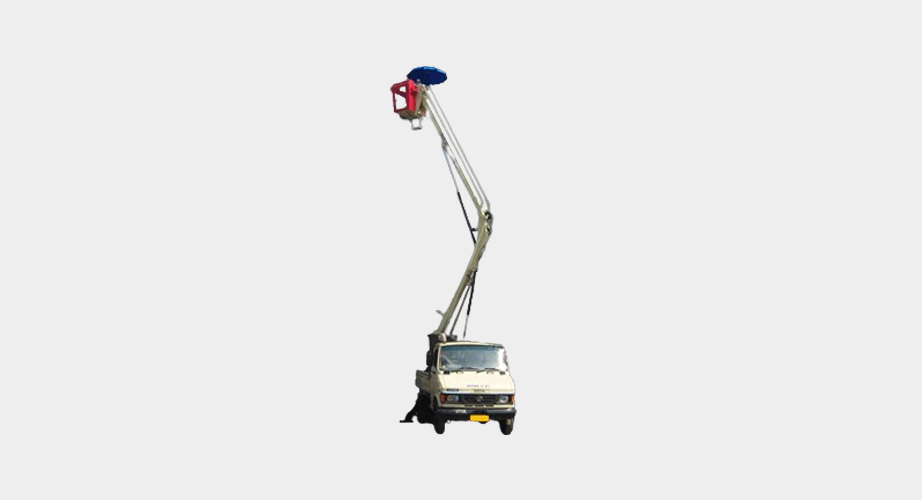
Compact articulating boom for lifting into tight, obstructed spaces.
View Details →

The main types of garbage trucks are rear loaders, front loaders, side loaders, and container trucks such as roll-off and hook lift trucks. Each one is built around how the waste is loaded: by hand or cart at the back, by forks at the front, by an arm at the side, or as a whole container.
The right type depends on your routes, your containers, and the kind of waste you collect. A city collecting household carts on narrow streets needs a different truck than a hauler serving commercial dumpsters or a contractor moving construction debris.
This guide explains each type, compares them side by side, and covers the questions to answer before you add a truck to your fleet.
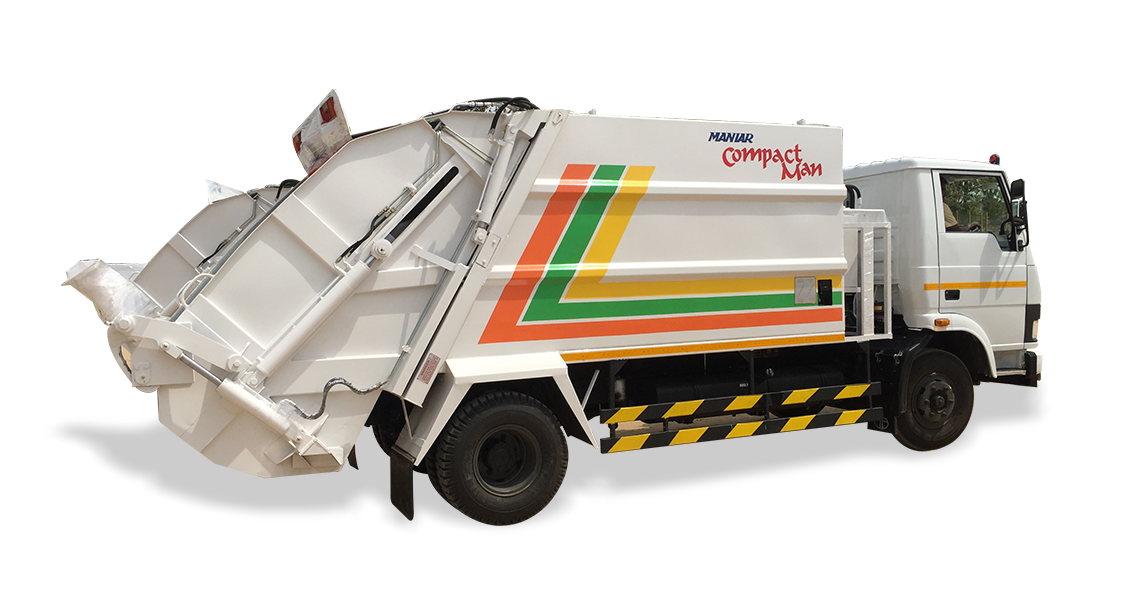
In the industry, garbage trucks are usually called refuse trucks, waste collection vehicles, or solid waste trucks. They fall into two broad groups.
Compactor trucks have an enclosed body and a hydraulic packing system that compresses waste as it is loaded. Compaction lets one truck carry far more waste per trip, so these trucks do most curbside and commercial route collection. Rear loaders, front loaders, and side loaders are all compactor trucks.
Container trucks carry the whole container rather than emptying it into a body. They are used for large volumes, heavy materials, and sites where a container stays in place until full. Roll-off trucks, hook lift trucks, and skip loaders are in this group.
A third group covers specialty trucks, such as dump trucks and high dump trucks, which carry loose material or transfer it into another container.
A rear loader is filled from the back. Crews tip carts or bags into a hopper at the tailgate, or a bin lifter does it hydraulically. A pusher plate sweeps the waste into the body, and a compaction plate presses it tight.
Best for: residential routes, alleys, bulky items, and mixed waste. Rear loaders are among the most common garbage trucks for household collection because they handle almost any kind of waste and fit on tighter streets.
How compaction works: At the landfill or transfer station, the same plate pushes the load out of the body for fast, complete unloading. Depending on the material, compaction can reduce waste volume by up to three times, so the truck makes fewer trips to the disposal site.
Typical options: cart and bin lifters, dumpster arms for commercial containers, and a knuckle boom crane for lifting underground waste containers.
Maniar's rear loader refuse compactor trucks come in 9.2 and 18.3 cubic yard bodies, with bin lifters that handle 32 to 290 gallon carts.
A front loader has two hydraulic forks at the front of the truck. The driver lines up with a commercial dumpster, slides the forks into its sleeves, and lifts it over the cab to empty it into the body.
Best for: commercial and industrial routes with large dumpsters at restaurants, stores, offices, and apartment buildings. Front loaders handle heavy containers quickly, often with a single operator.
Keep in mind: front loaders need overhead clearance to lift containers over the cab, so low wires, trees, and building overhangs can limit where they work.
A side loader is filled from the side. There are two main kinds:
Best for: high-volume residential routes with standardized carts. Automated side loaders reduce manual lifting and can service many homes per hour.
Keep in mind: automated routes need carts of a standard size, placed at the curb with enough space around them for the arm.
A roll-off truck carries large open-top containers. It uses a hoist, usually cable or hook driven, to pull the container onto the truck bed, haul it to a landfill or recycling site, and set an empty container back in its place.
Best for: construction and demolition debris, renovation projects, cleanouts, and large industrial waste volumes. Roll-off containers stay on site until full, so one truck can serve many locations.
A hook lift truck, also called a hooklift or hook loader, uses a hydraulic arm with a hook to grab a container by its front bar and pull it onto the truck. It is a common type of roll-off system and switches containers quickly without the driver leaving the cab on many models.
Best for: cities and haulers that place movable containers around town, such as at drop-off sites, parks, and public facilities. One hook lift truck can serve many containers, and the same truck can carry different bodies for different jobs.
Learn more about our hook loader.
A skip loader uses two hydraulic arms with chains to lift a smaller open container, called a skip, onto the truck and tip it to empty the load.
Best for: construction sites, industrial plants, markets, and neighborhoods where smaller containers are placed and collected often. Skips are easy to move and set down in tight spaces.
See our skip loader.
A dump truck has an open body that tips to unload loose material. In waste work, dump trucks haul bulky waste, yard debris, and landfill cover material.
A high dump truck raises its body to a high hinge point before tipping. This lets it empty directly into another container, such as a larger truck or a transfer trailer, without unloading on the ground first.
Best for: street sweeping debris, yard waste, and small collection trucks that transfer loads to larger vehicles.
Explore our dump truck and high dump truck.
Match the truck to how your waste is stored: carts and bags point to a rear or side loader, dumpsters to a front loader, and large containers to a roll-off, hook lift, or skip loader.
| Truck type | How it loads | Containers | Compacts waste | Best for |
|---|---|---|---|---|
| Rear loader | From the back, by hand or bin lifter | Bags, carts, small dumpsters | Yes | Residential routes, alleys, mixed waste |
| Front loader | Forks lift over the cab | Large commercial dumpsters | Yes | Commercial and industrial routes |
| Side loader | From the side, by hand or automated arm | Standard carts | Yes | High-volume residential routes |
| Roll-off | Hoist pulls container onto the bed | Large open-top containers | No | Construction debris, cleanouts |
| Hook lift | Hook arm pulls container on | Hook lift containers | No | Drop-off sites, multi-body fleets |
| Skip loader | Arms and chains lift the skip | Smaller skips | No | Job sites, plants, markets |
| High dump truck | Body raises and tips into another container | None (loose load) | No | Sweeping debris, transfer to larger trucks |
The main types are rear loaders, front loaders, side loaders (manual and automated), roll-off trucks, hook lift trucks, and skip loaders. Specialty types include grapple trucks, split body trucks, and high dump trucks.
In the industry, garbage trucks are usually called refuse trucks, refuse compactor trucks, waste collection vehicles, or solid waste trucks.
Rear loaders and side loaders. Rear loaders handle bags, carts, and bulky items on tighter streets, while automated side loaders suit high-volume routes with standard carts.
Both carry large containers. A hook lift truck is a type of roll-off system that uses a hydraulic hook arm instead of a cable hoist, which makes swapping containers faster.
It depends on the material, but a refuse compactor can reduce waste volume by up to three times. That means fewer trips to the disposal site.
Yes, if it is fitted with dumpster arms. Without them, rear loaders are best suited to carts, bags, and smaller bins.
Maniar builds rear loader refuse compactors, hook loaders, skip loaders, cart tippers, and dump trucks for municipal sanitation departments, private haulers, and industrial sites. Our US team in Windsor, California, can help you match equipment to your routes and containers.
Tell us your route type, container sizes, and preferred chassis, and we will recommend the right model and send specifications.