Get Your Free Quote…!


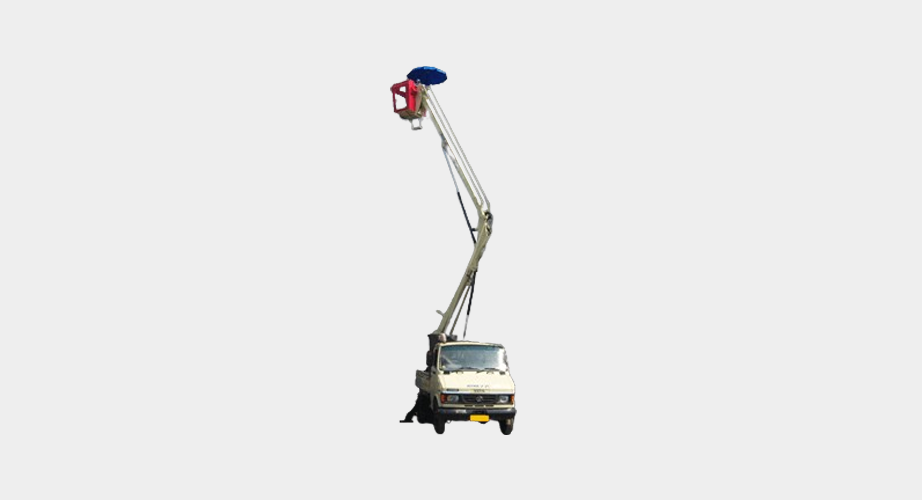
Compact articulating boom for lifting into tight, obstructed spaces.
View Details →

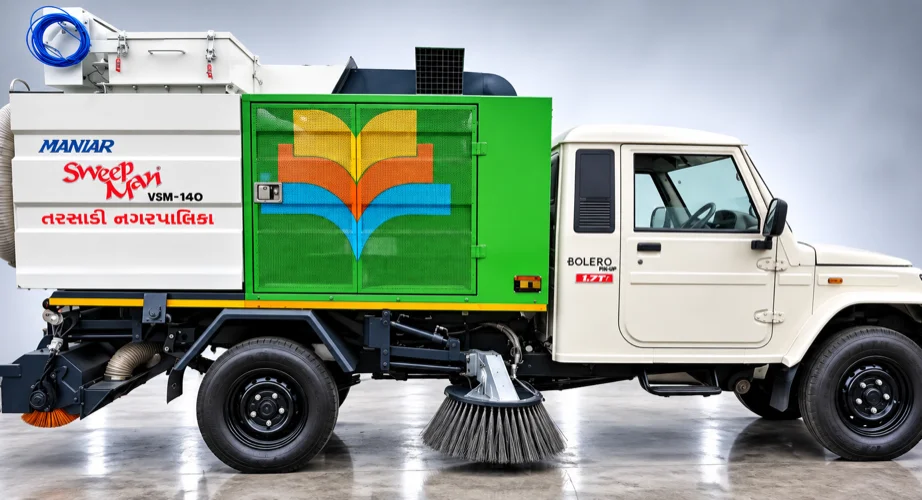
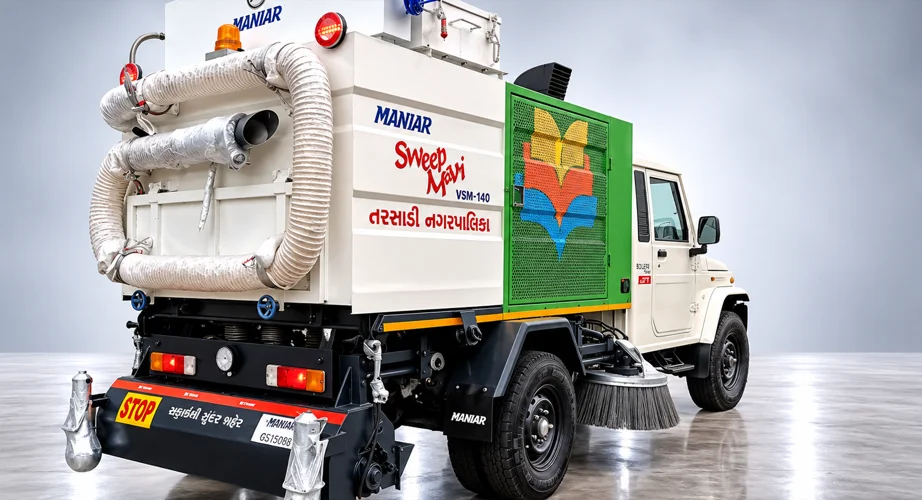
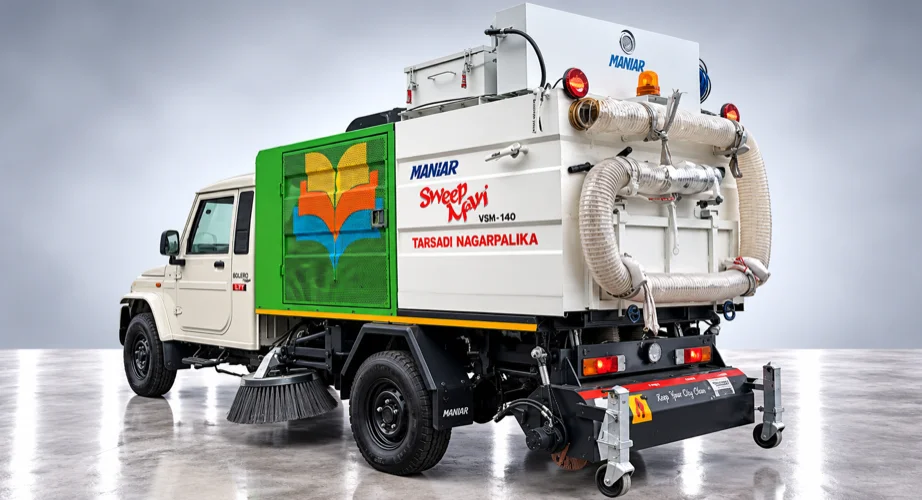
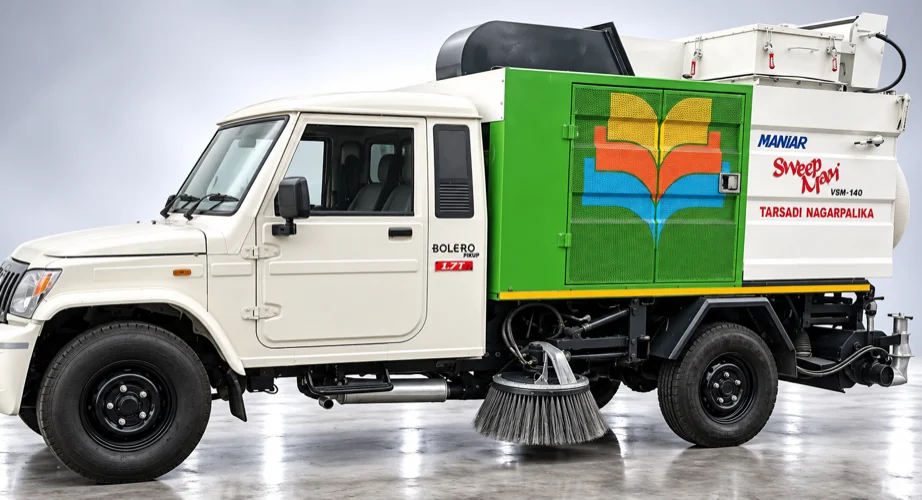
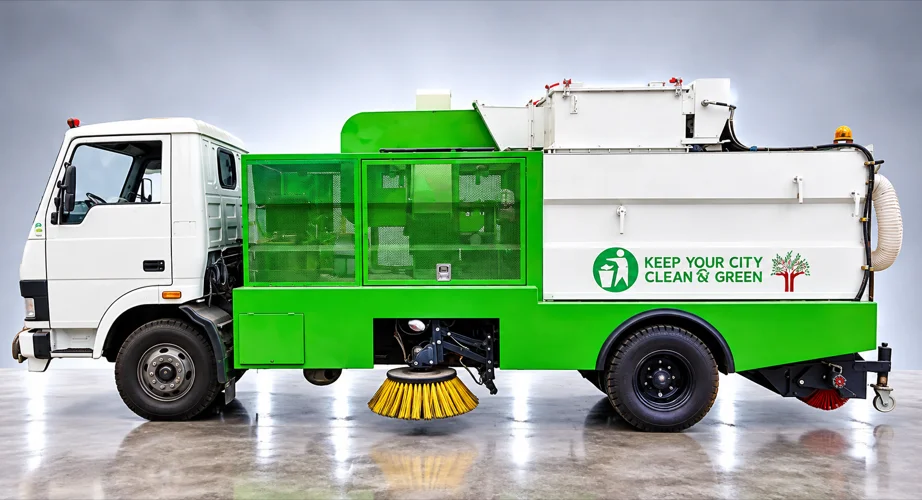
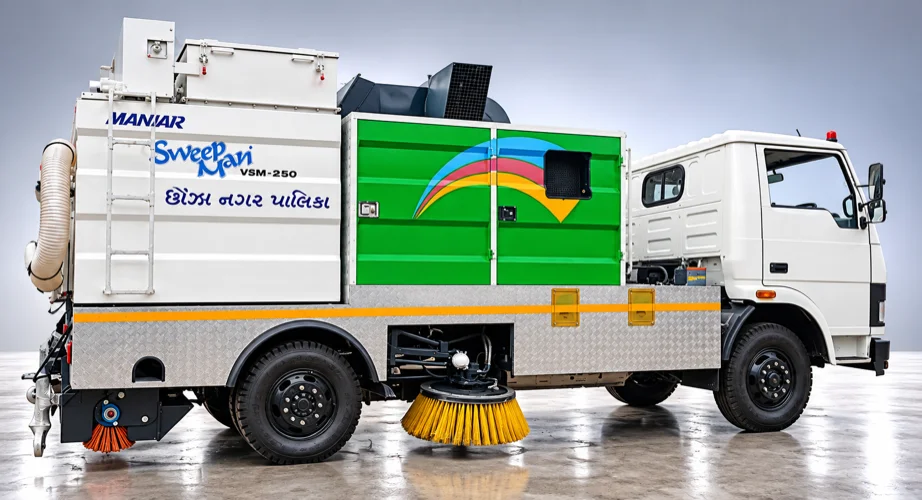
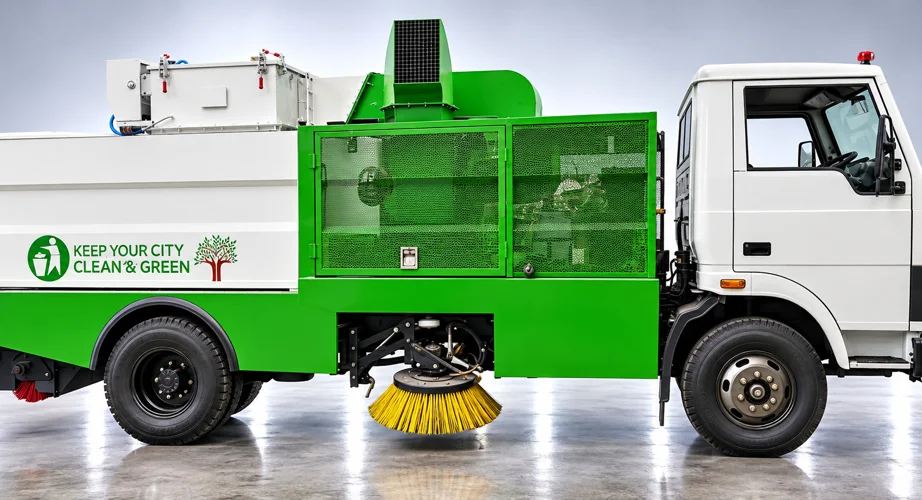
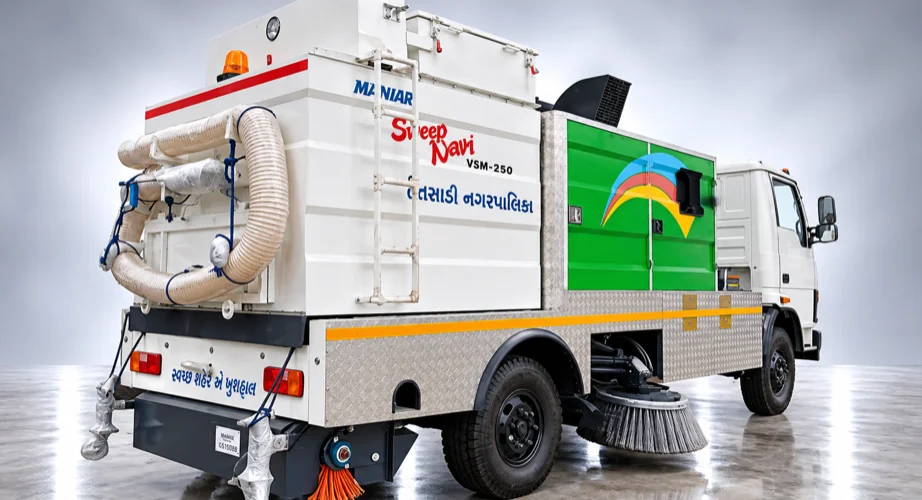
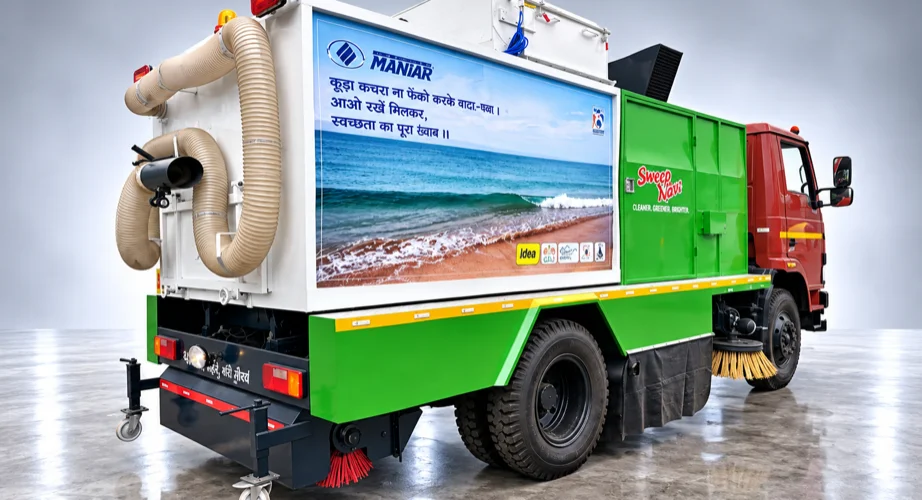
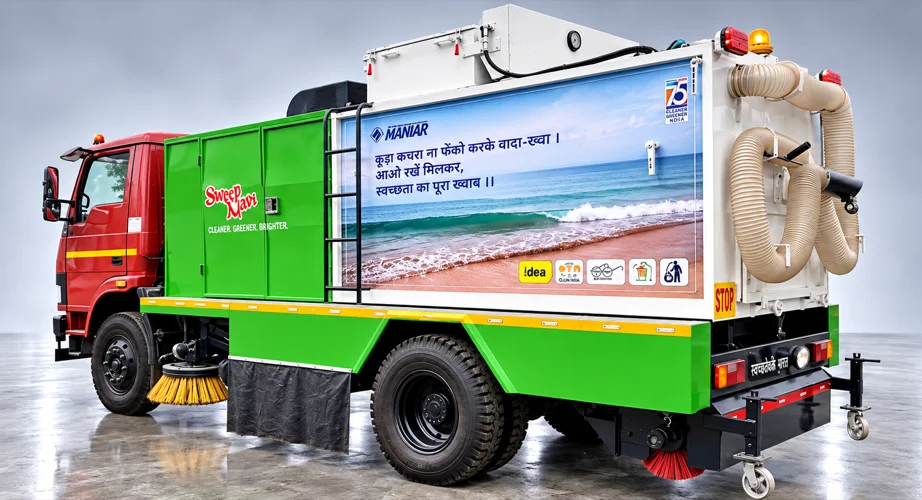
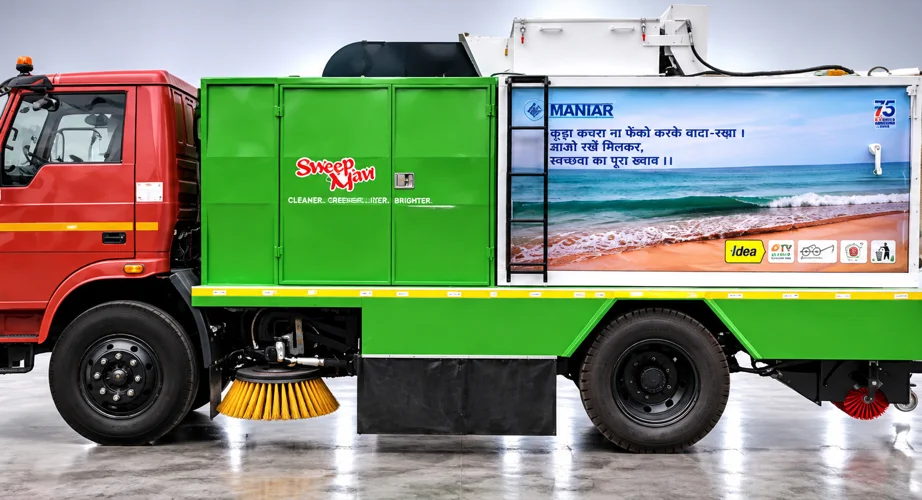
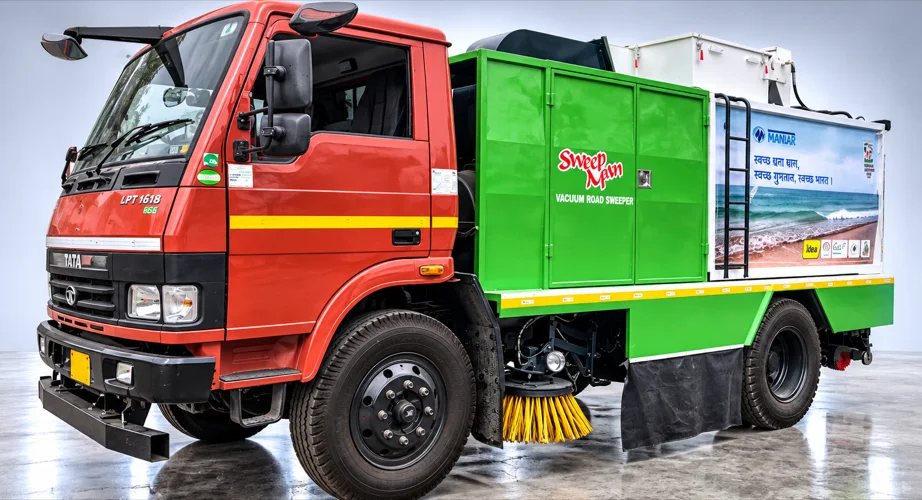
Vacuum sweepers pick up gravel, leaves, litter, and sand from asphalt, concrete, and brick roads without raising dust into the air. A main broom and two hydraulically driven side brooms sweep debris into the path of a suction hose, which a blower draws into a hydraulically operated hopper. Dust pulled in along with the debris passes through a pleated filter bank with an automatic pulse-jet cleaning cycle before the air is released, so nothing escapes back into the atmosphere. Maniar's vacuum sweeper range spans hopper capacities from 1.4 to 6 cubic meters, mounted on chassis sized to match — from a compact truck for narrow streets up to a heavy-duty chassis for high-volume routes.
Page last updated: September 11, 2026
Four capacities — 1.4, 3, 5, and 6 cubic meters — mounted on chassis sized to match, from a compact truck up to a heavy-duty chassis.
Debris and dust drawn in by the blower pass through a pleated filter bank with an automatic pulse-jet cleaning cycle before the air is released, so dust doesn't escape back into the atmosphere.
The 3, 5, and 6 cum models carry an onboard water tank and spray system at the brooms for additional dust suppression. The compact 1.4 cum model does not carry a water system.
On the smallest (1.4 cum) model, from a split PTO. On the larger models, from an auxiliary diesel engine, with several of them also offering a PTO-driven alternative.