Get Your Free Quote…!


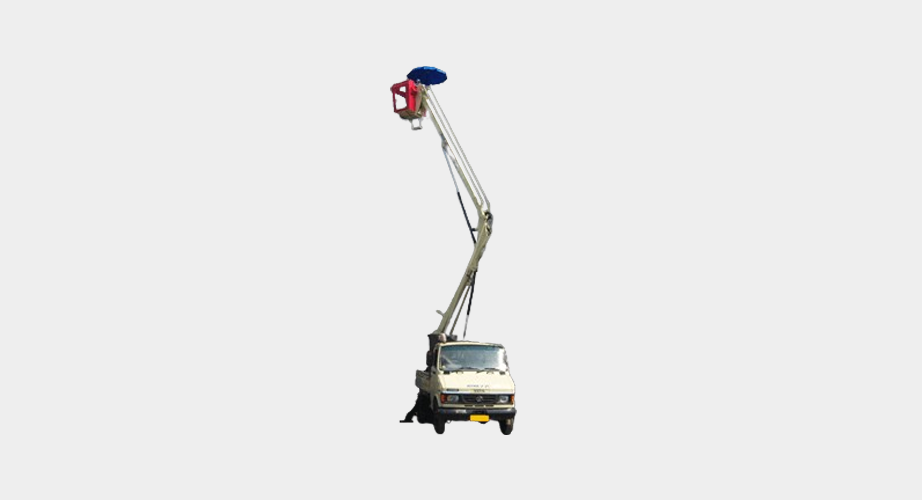
Compact articulating boom for lifting into tight, obstructed spaces.
View Details →

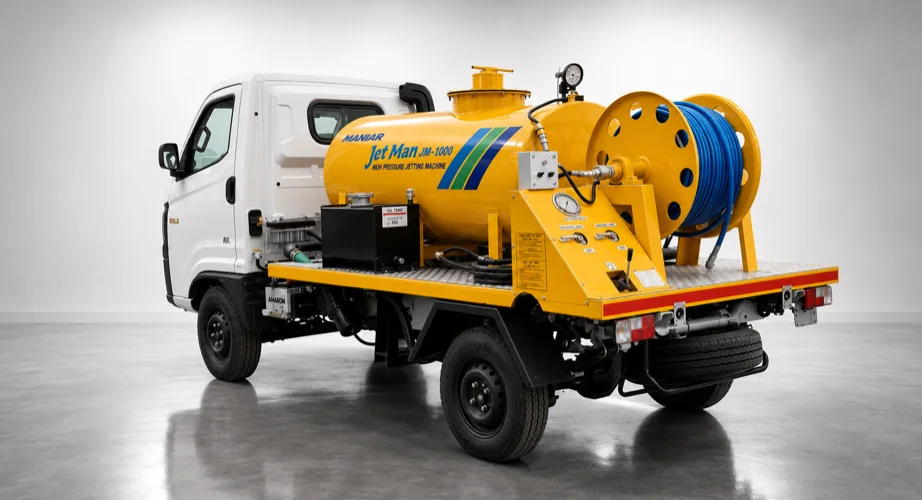
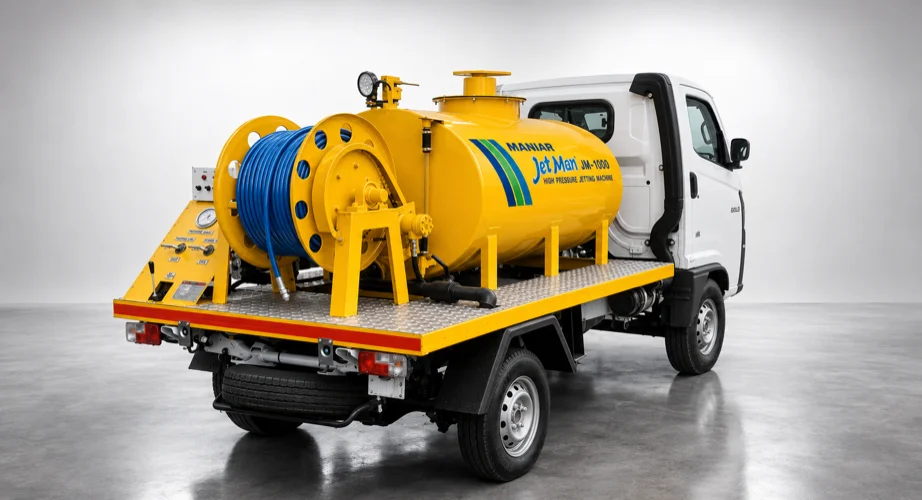
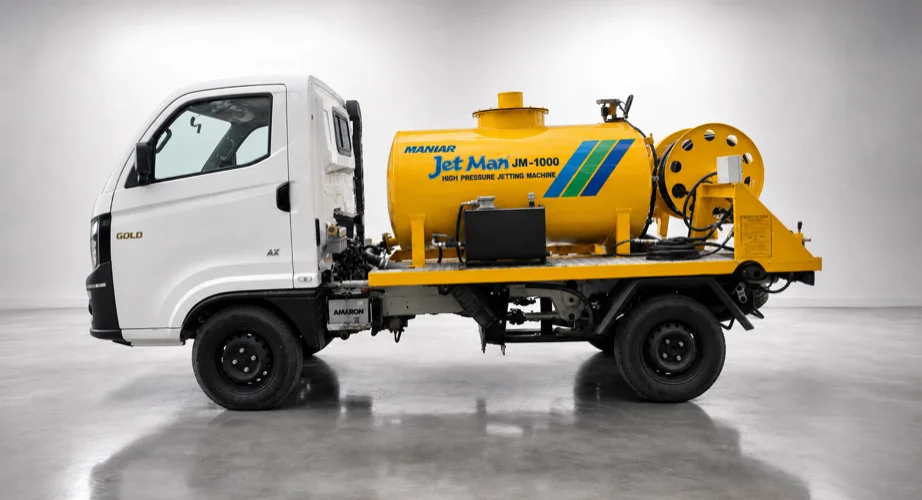
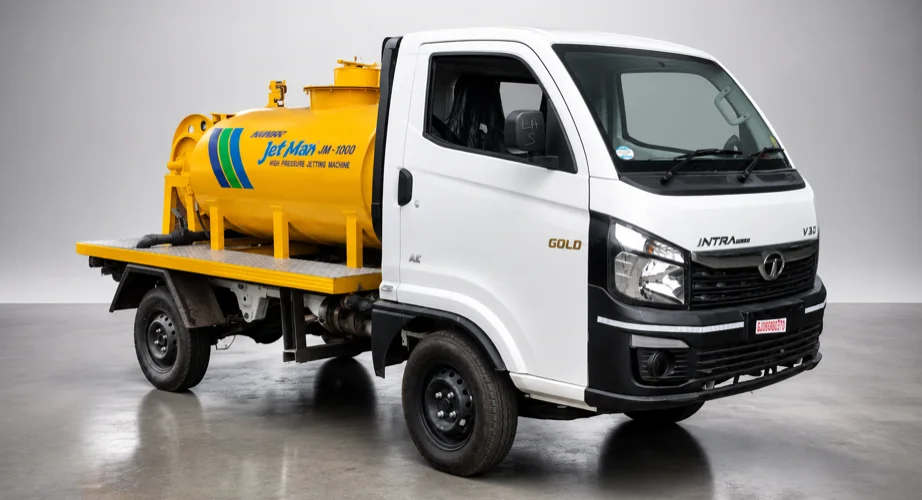
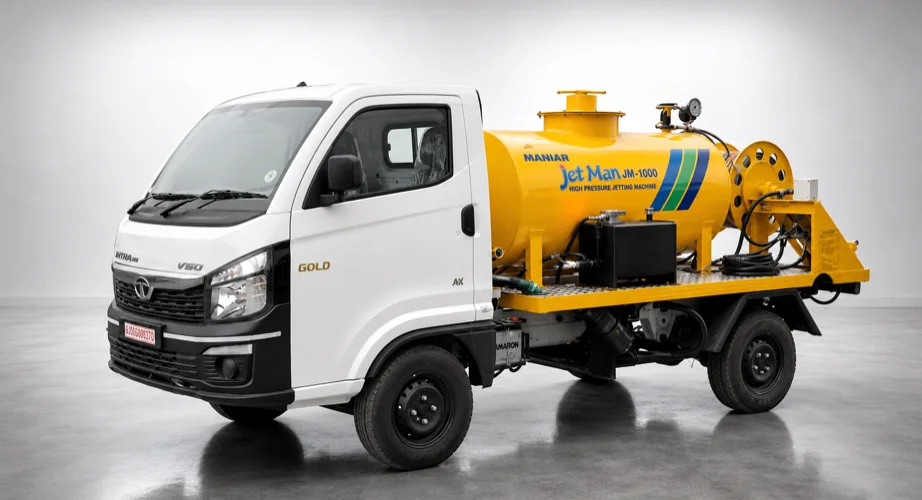
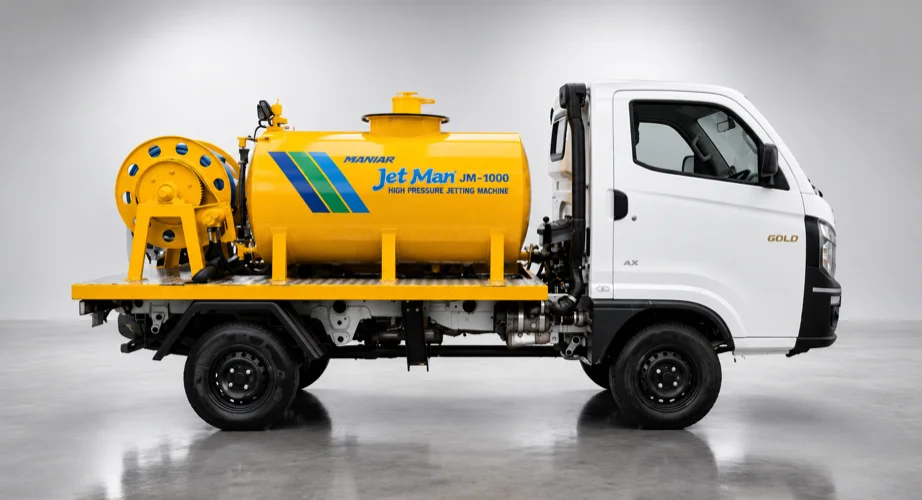
The MJ-1000 is a 1,000-liter sewer jetter mounted on a 1.7-ton chassis, built for clearing blocked sewer and drain lines up to about 8 inches in diameter — a step up in flow and hose length from the compact MJ-500, while still fitting a smaller vehicle footprint.
Page last updated: September 9, 2026
High-pressure jetting clears a blocked line and flushes the debris out of it, rather than just pushing the blockage further down the pipe. The MJ-1000's 60 LPM / 140 bar triplex plunger pump, driven by a full-torque split-shaft PTO off the vehicle's gearbox, forces water through a 12mm x 60m hose and a self-propelled nozzle that pulls itself forward through the line, breaking up the blockage and flushing debris ahead of it. Because it maintains constant pressure at the nozzle regardless of hose length, it cleans faster and more consistently than mechanical rodding or cable machines. A hydraulically wound hose reel and an additional hand-held washing gun for equipment, vehicle, and general high-pressure washing round out the unit.
Every MJ-series sewer jetter ships standard with two nozzle types:
Additional nozzle types can be supplied to match specific jetting jobs, including:
Enter your details below and we'll email you the complete specification sheet for this model, along with a photo so you know exactly which unit you're looking at.
Up to about 200mm (8 inches) in diameter, using its 60 LPM / 140 bar jetting pump and 60m hose.
Conical Head and Round Head nozzles, both with front and rear holes, are standard. Specialty nozzles such as root cutters and descaling nozzles can be supplied on request.
Yes — a camera can be fitted in place of the nozzle on any MJ-series jetter, including the MJ-1000, with both live view and recording.
The MJ-1000 carries roughly double the flow (60 LPM vs. 13 LPM) and twice the hose length (60m vs. 30m), driven off the vehicle's own PTO rather than an auxiliary engine, letting it handle larger lines and longer runs.